Process Design & Redesign
Citizens don't experience your mission. They experience your process.
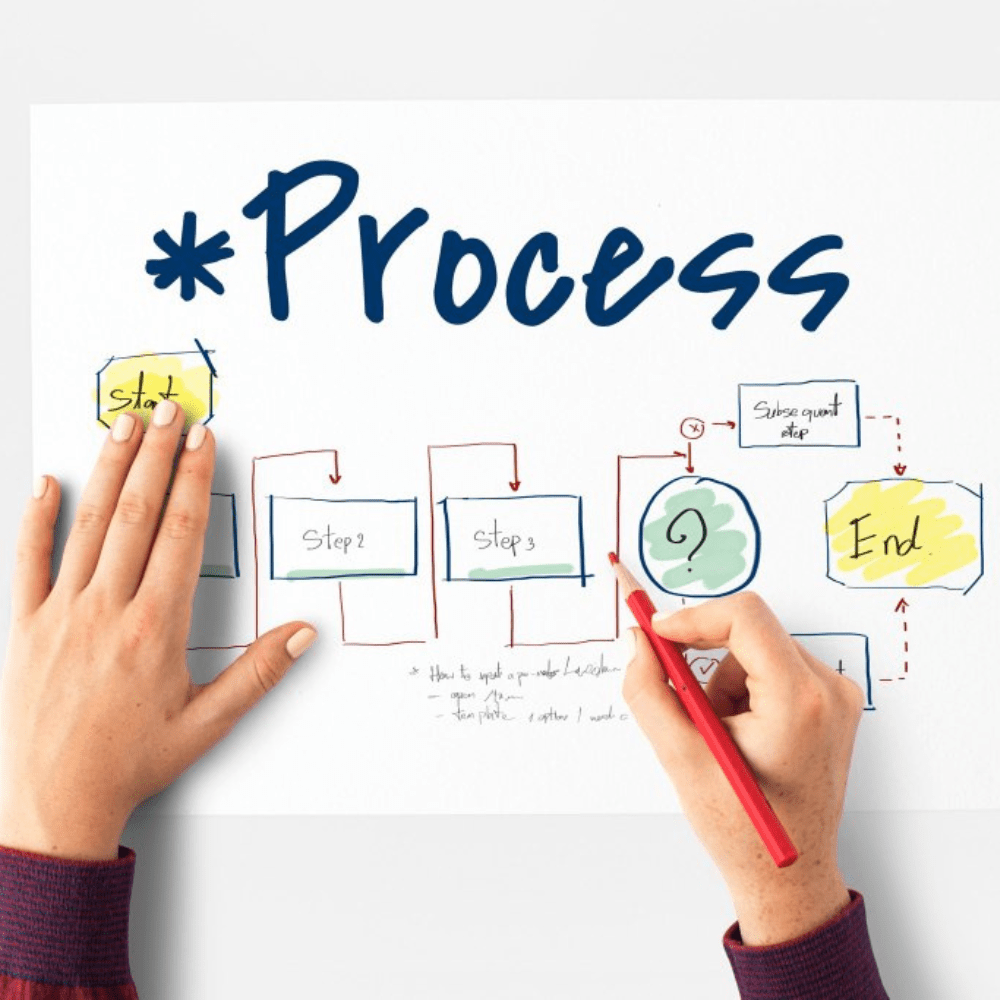
Government mission delivery runs through hundreds of processes, some facing citizens directly, like the revenue systems that fund public services, the benefits programs millions depend on, and the health and human services that protect them, and others working behind the scenes, like the procurement that funds agency operations, the program integrity work that protects public dollars from fraud, and the privacy protections that safeguard citizen data. Many of these processes were built years or decades ago, layered on top of each other as regulations, systems, and staff changed, until no one person can fully explain how work actually moves from request to result. We partner with agency teams to map how work really happens, redesign it around the outcome that matters, and build the technology and automation into the process itself from the start, so the experience citizens and staff actually have finally matches the mission it’s meant to serve.
Process design is where mission strategy meets daily reality. Every redesign, whether it reshapes a citizen-facing service or a back-office workflow, is built around how people actually work, with the technology built in rather than bolted on.
What we hear from government clients
Every extra step in a process is a cost citizens pay, not just government
Public administration research describes this as administrative burden, the learning, compliance, and psychological costs citizens absorb every time a process is unclear, redundant, or hard to navigate. Those costs fall hardest on the people with the least time, information, or trust to spare, and they shape how citizens experience government long after the transaction ends.

Undocumented, inconsistent processes don't just slow work down, they show up as losses on the government's books.
Executive branch agencies have reported cumulative improper payment estimates of about $3 trillion since fiscal year 2003, including $186 billion in a single recent fiscal year alone, and GAO has found these payments to represent a persistent weakness in internal controls, not simply the result of external bad actors. Much of that exposure runs through the benefit, health, and revenue programs that states and localities administer jointly with federal partners, which means the risk lives in both federal and local process design. When a process depends on individual judgment instead of a designed, consistent workflow, the government isn’t just risking a slow transaction, it’s risking the kind of control weakness that auditors are required to report.

A single process rarely lives inside a single office.
Public sector process research consistently finds that government workflows are unusually fragmented, spanning multiple departments, systems, and approval chains, which makes it hard to see where a process actually breaks or to coordinate a fix across every office that owns a piece of it. Redesigning one office’s piece of the process without touching the rest just moves the bottleneck downstream.
What we do about it
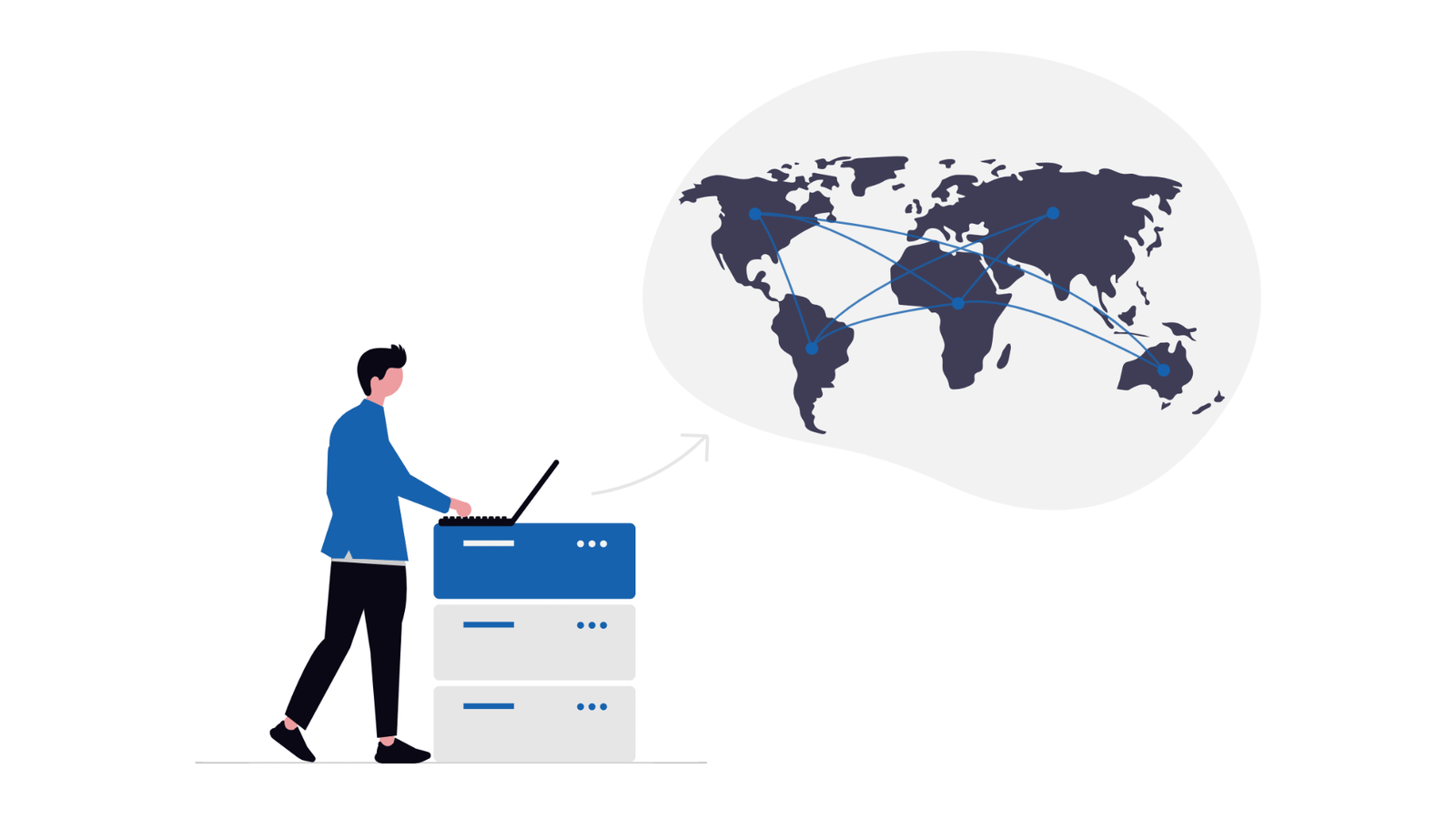
Current-state process mapping
We document how work actually happens today, not how the policy manual or org chart says it should, surfacing the workarounds, handoffs, and bottlenecks that usually live only in people’s heads.
Process and experience redesign
We rebuild the process around the person moving through it, citizen or staff member, removing the steps that exist out of habit rather than necessity, so the process reflects the mission it’s meant to serve.
Embedded automation and technology
We build automation and digital tools into the redesigned process itself rather than layering them on top of the old one, the approach behind successful modernization efforts and the reason research consistently finds that technology added on top of a process that has not been carefully designed, tends to fall short of its goals.

Cross-office process governance
We align the departments, systems, and approval chains that share ownership of a process, so a redesign holds together end to end instead of shifting the bottleneck to the next office in line.
Documentation and knowledge transfer
We turn tribal knowledge into documented, repeatable process, so performance doesn’t depend on any one person staying in their seat.
We have the mandate, but need stronger execution capacity.
BrainDance helps agencies move from strategy to measurable mission outcomes.
Government agencies face rising mandates, constrained resources, modernization pressure, and constant demand for measurable outcomes. BrainDance Collective helps bridge the gap between what agencies are required to deliver and what internal teams are resourced to execute. We bring senior-led support across strategy design, program and contract management, process improvement, data analytics, technology modernization, and AI-enabled operations.
Mission Realization, Built for Public Sector Execution
Mission realization means turning agency priorities into coordinated action, measurable progress, and sustainable operational capacity. BrainDance works shoulder to shoulder with government leaders and program teams to clarify the roadmap, manage implementation, strengthen accountability, and deploy the right expertise at the right moment — without unnecessary overhead, bloated staffing, or generic advisory layers.
Mission-ready support, without excess overhead.
Execute the Mission at Scale
From roadmap development to PMO activation, contract oversight, data intelligence, AI strategy, and implementation support, BrainDance helps agencies deliver complex initiatives with clarity, discipline, and measurable progress.
Strategy That Moves Into Action
We help agencies translate strategic priorities into practical roadmaps, clear decision rights, phased milestones, and execution plans that can be managed, measured, and adjusted in real time.
Program Discipline for Complex Missions
Our senior-led delivery model supports multi-workstream programs, contract oversight, milestone tracking, risk management, stakeholder coordination, and performance reporting from planning through implementation.
Growth Insights
Unlocking Operational Alpha
AI-Driven Velocity
Automating the Non-Linear Edge
We design and deploy bespoke AI frameworks that automate manual bottlenecking, supercharge team productivity.
Strategic Playbooks
Repeatable Engines for Accelerated Growth
Our tailored playbooks align cross-functional teams, unify fractured data streams, and establish clear KPIs
Stakeholder Alpha
Maximizing Value, Minimizing Noise
Through systematic operational upgrades, margin fortification, and continuous optimization
Embedded Execution
Where Strategy Meets Scale
Through systematic operational upgrades, margin fortification, and continuous optimization
Capital Allocation
Data-Driven Matrix for Margin Expansion
Our tailored playbooks align cross-functional teams, unify fractured data streams, and establish clear KPIs
Our Government Services
BrainDance supports federal and civil sector agencies with senior-level expertise across strategy, implementation, technology, analytics, and operational execution — right-sized for each mission phase.
Strategy & Roadmap Development
Future-state visioning, capability gap assessment, mission alignment, investment planning, executive briefings, and phased implementation roadmaps.
Program & Contract Management
Senior program oversight, federal contract lifecycle support, budget tracking, risk management, milestone reporting, and multi-workstream coordination.
Technology, Data & AI
AI strategy, intelligent automation, AIOps, predictive analytics, data governance, cloud modernization, and responsible technology adoption.